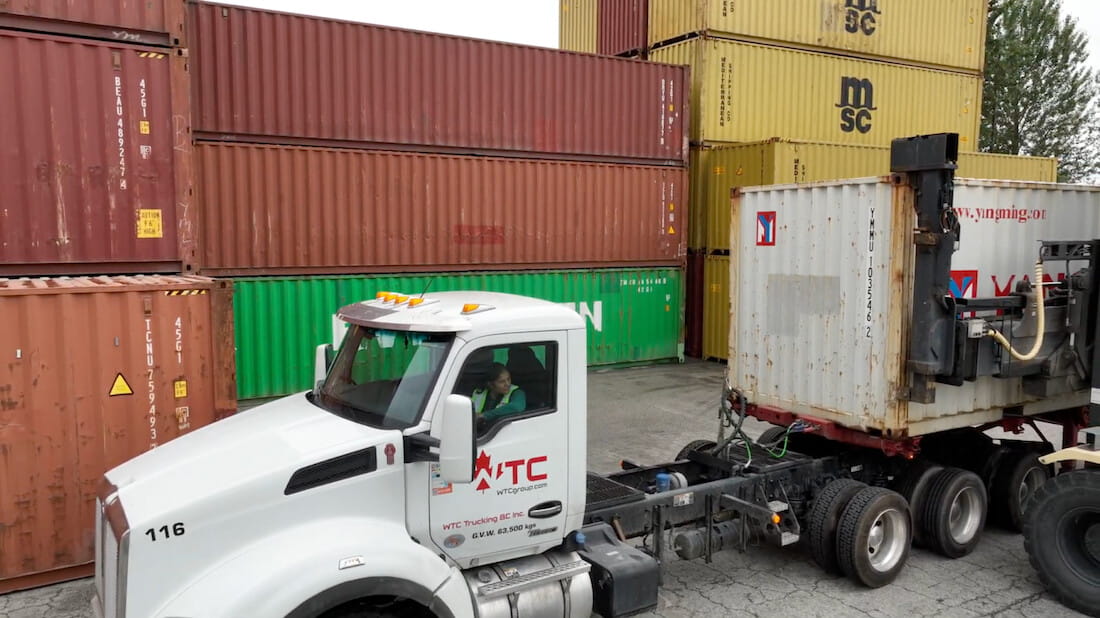
Containers sitting longer than planned. Port congestion. Rail delays. If you move freight through Canada’s major ports or intermodal hubs, this probably sounds familiar, and you’ve likely felt the ripple effects firsthand
That’s exactly where drayage comes in. It might seem like a small link in a supply chain, but it can make or break everything around it. When it slips, congestion snowballs. However, if your company works at optimizing it, you turn a bottleneck into a real competitive advantage.
In this article, we’ll explore beyond just a basic drayage definition. We’ll start with a straightforward definition of drayage, and quickly move on to how it fits into intermodal and multimodal freight strategies.
Find out how the right drayage approach can help you avoid costly bottlenecks at ports and rail terminals.
What Is Drayage? A Clear Definition That Actually Matters
In the simplest terms, drayage is the short-distance movement of a container from one transit point to the next. You’ll usually see drayage in action between:
- Ports and local warehouses
- Ocean terminals and rail ramps
- Rail yards and distribution centers
Think of drayage as the connective tissue of the shipping world. While ships and trains handle the long-distance “marathons,” drayage is the specialized short-distance sprint that moves freight between them.
It is the essential link that keeps cargo moving without getting stuck at the gate. Without it, the entire intermodal shipping system would grind to a halt.
Drayage vs Intermodal: Understanding the Difference
One of the most common questions in logistics is drayage vs intermodal. They are related, but not interchangeable. In fact, drayage should be considered one of the key building blocks of a strong intermodal shipping strategy.
Intermodal shipping is the end-to-end approach to moving containerized freight using two or more modes of transportation. This is often a combination of ocean, rail and truck. Through this process, the cargo stays in the same container to reduce handling, risk, and delays.
Every intermodal shipment has “handoff points” where something has to physically move the container from one network to another. That handoff is drayage.
If drayage is late, unavailable, or poorly coordinated, the intermodal plan not only slows operations; it also disrupts them. It can trigger a chain reaction: missed rail cutoffs, longer container dwell time, demurrage and detention risk, and reduced port or terminal fluidity.
Why Drayage Plays a Critical Role in Avoiding Congestion
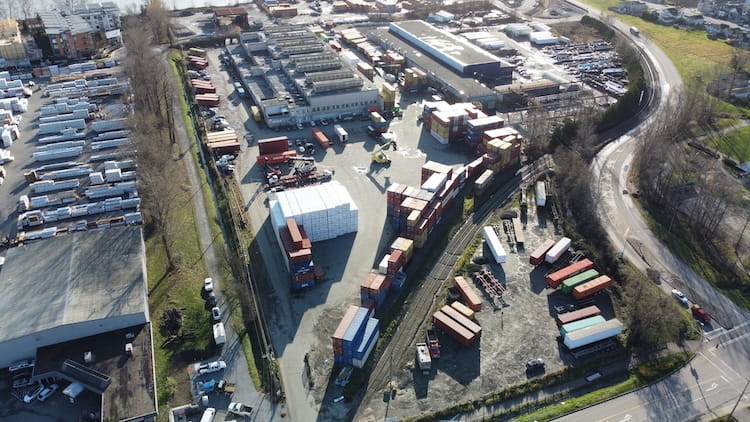
Congestion at train stations or Canadian ports is rarely caused by a single failure. It builds when small delays stack up across the supply chain.
Drayage directly influences congestion in several ways:
Port Fluidity
Efficient container drayage quickly moves containers out of terminals, helping to free up yard space and decrease vessel backlogs.
Rail Terminal Throughput
Reliable drayage guarantees that containers reach rail ramps on time and depart promptly. Effective drayage ensures everything runs smoothly and efficiently.
Demurrage and Detention Avoidance
Demurrage refers to fees charged when containers sit at a port or terminal beyond the allotted free time. Detention fees apply when containers or chassis are returned late after pickup. Poor drayage planning increases the risk of both.
In contrast, effective drayage coordination keeps containers moving on time and helps you avoid unnecessary charges that add up quickly.
Predictable Transitions Between Modes
When drayage is scheduled accurately, freight flows smoothly from ship to rail to warehouse without disruption.
Types of Drayage Services You Should Know
Did you know that not all drayage services are the same? Understanding the available options helps you build a stronger multimodal freight strategy.
- Container Drayage: Short-haul trucking of full containers, typically within a defined radius of a port or rail terminal.
- Port or Pier Drayage: Moves containers between marine terminals and nearby warehouses or rail facilities.
- Intermodal Drayage: Transfers containers between rail ramps and other modes of transportation.
- Shuttle Drayage: Relocates containers to temporary storage yards to relieve congestion or manage timing constraints.
- Expedited Drayage: Time-sensitive moves designed to prevent delays for critical or perishable freight.
How WTC Group Approaches Drayage Differently
At WTC Group, we don’t treat drayage as a standalone service. It is fully integrated into broader multimodal and transloading strategies.
With over two decades of logistics experience across Canada, WTC Group understands how port congestion, rail availability, and inland capacity interact in real time.
Our roots in transloading give us a unique advantage. We design drayage flows that support faster container turn times, reduce bottlenecks, and keep freight moving even when conditions change.
By combining drayage services with intermodal, transloading, and rail expertise, WTC Group can help shippers maintain control in an increasingly unpredictable logistics environment. Get help from a WTC Group expert now.